All Pakistan Educational Board Results Portal

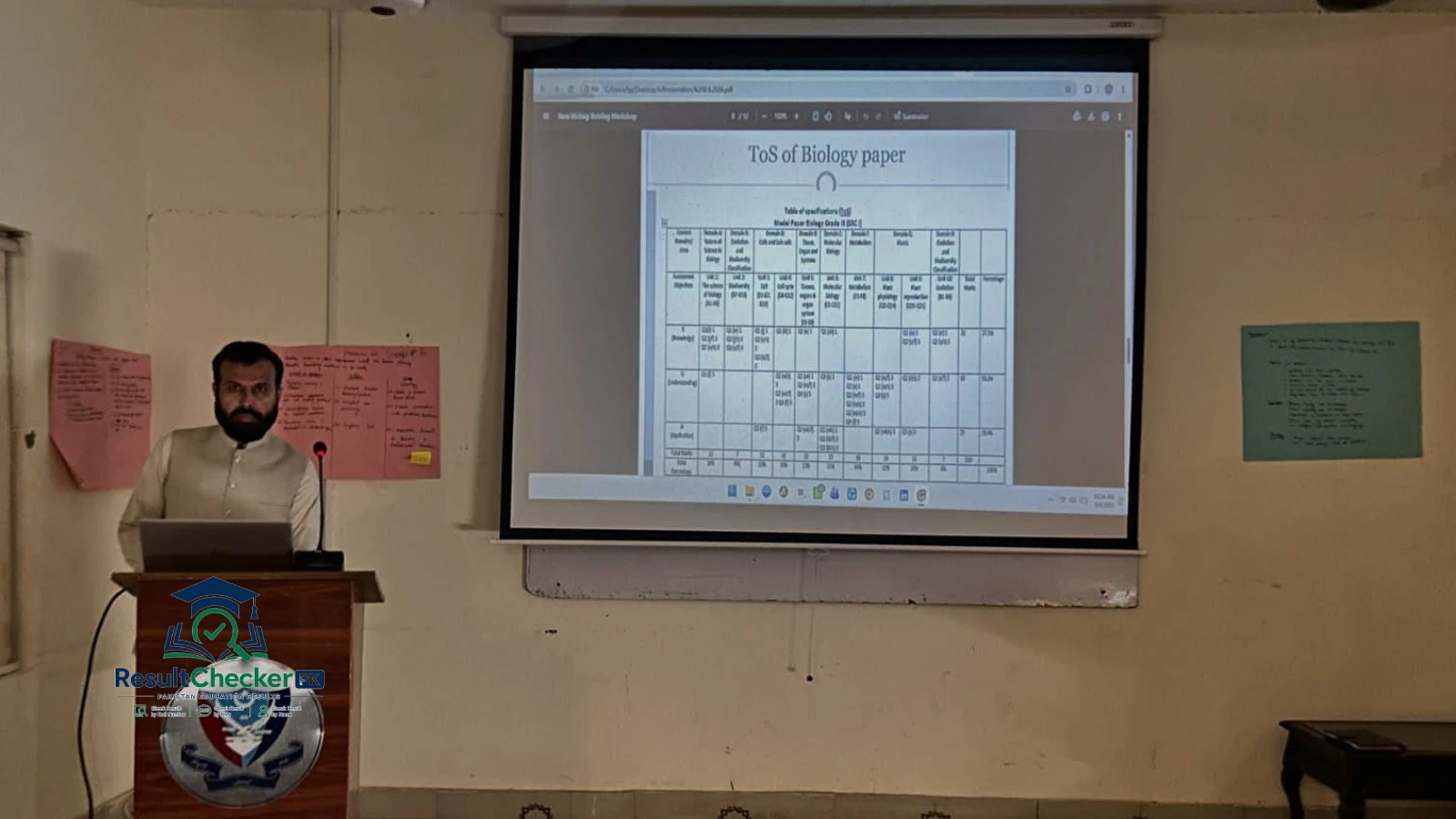
FBISE Conducts Capacity Building Workshop on SLO Based Assessment at Cadet College Jhang 2026

FBISE Conducts Capacity Building Workshop at Cadet College Jhang
The Federal Board of Intermediate and Secondary Education (FBISE), in collaboration with Cadet College Jhang, conducted a Capacity Building Workshop on SLO Based Assessment and Recent Assessment Reforms at Cadet College Jhang.
The workshop brought together teachers and educationists from institutions across Shorkot Cantt, Jhang, and Chiniot. The session focused on helping teachers understand modern assessment practices and effectively apply SLO based assessment in classrooms and examinations.
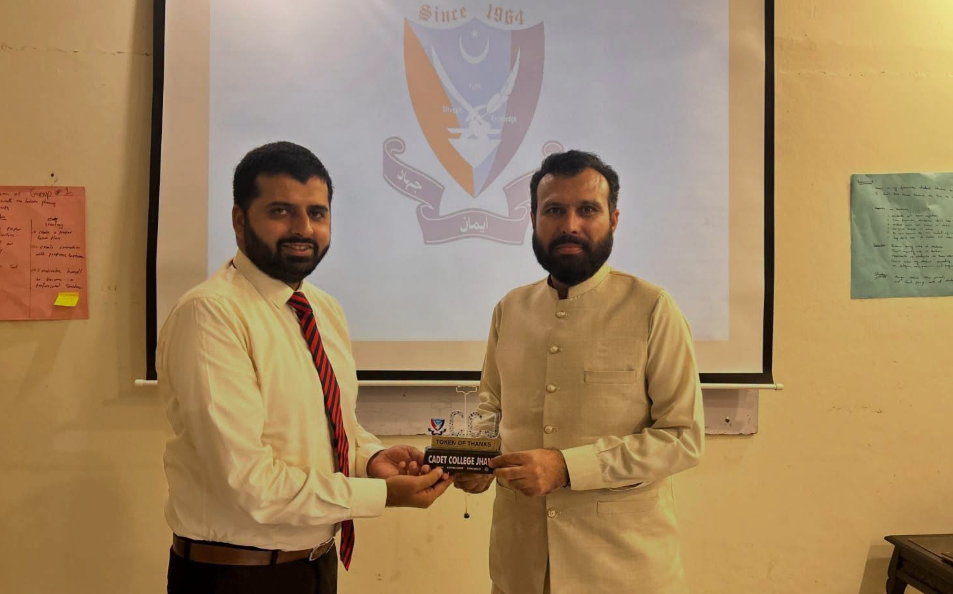
Key Highlights of the FBISE Workshop
The capacity building session focused on several important areas related to Pakistan’s evolving examination and assessment system.
According to the information shared about the workshop, the major areas discussed included:
- SLO based assessment
- Recent assessment reforms introduced by FBISE
- SLO based question paper development
- Formative assessment techniques
- Modern classroom assessment practices
- Changes in examination paper patterns
- Effective implementation of assessment reforms
These areas are particularly important for teachers because examination systems are increasingly moving towards assessments that measure students’ understanding, concepts, and learning outcomes rather than relying only on memorization.
Who Conducted the Training Session?
The workshop was conducted by Mr. Syed Zulfiqar Shah, Deputy Secretary (Research & Academics), FBISE.
He provided insights into recent assessment reforms and explained how teachers can better understand and implement SLO based assessment.
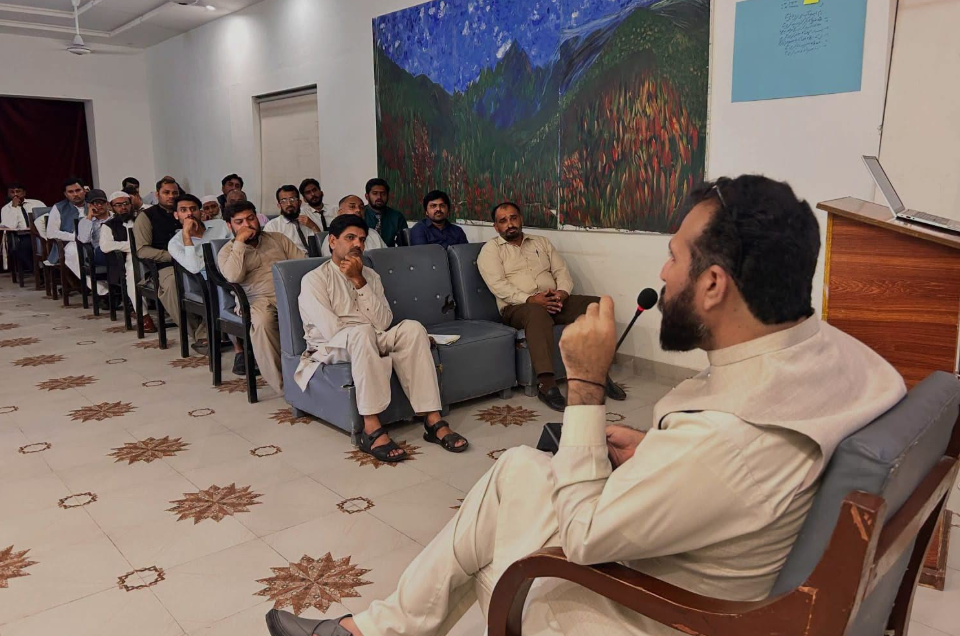
The session also provided an opportunity for teachers from different institutions to share experiences, discuss assessment challenges, and learn about changing examination requirements.
What Is SLO Based Assessment?
SLO stands for Student Learning Outcomes.
In an SLO based assessment system, questions are designed to determine whether students have achieved specific learning outcomes defined for a subject.
Instead of simply asking students to reproduce information from textbooks, SLO based questions can test:
- Understanding of concepts
- Application of knowledge
- Problem solving
- Analysis and reasoning
- Practical understanding of topics
This approach can help teachers identify whether students genuinely understand the material they have studied.
FBISE 50% MCQs and 50% Descriptive Paper Pattern
One of the important areas discussed during the workshop was the introduction of a 50% MCQs and 50% descriptive paper pattern.
Under this approach, the examination paper includes both objective and descriptive components. This allows assessment of different aspects of student learning.
| Assessment Component | Weightage |
|---|---|
| MCQs | 50% |
| Descriptive Questions | 50% |
| Total | 100% |
The exact implementation and subject specific requirements may vary according to the relevant FBISE examination scheme and official instructions.
Students should therefore always consult the latest official FBISE syllabus, assessment framework, and examination instructions before preparing for an examination.
Why These Assessment Reforms Matter for Students
The move towards SLO based assessment can change how students need to prepare for examinations.
Simply memorizing textbook answers may not be enough. Students should focus on understanding concepts and practicing questions that require them to apply their knowledge.
Students Should Focus On:
- Understanding each topic rather than memorizing answers.
- Reviewing the learning outcomes provided for their subjects.
- Practicing MCQs regularly.
- Solving descriptive and conceptual questions.
- Learning how to explain answers in their own words.
- Practicing past papers and sample questions where available.
Importance of Capacity Building for Teachers
Teachers play a central role in implementing any assessment reform. Workshops such as this provide educators with an opportunity to understand new assessment approaches before applying them in their classrooms.
The FBISE workshop at Cadet College Jhang also brought together educationists from Jhang, Chiniot, and Shorkot Cantt, creating a platform for professional learning and knowledge sharing.
Better teacher understanding of SLO based assessment can ultimately help students become more familiar with the type of questions they may encounter in examinations.
What Should Students and Teachers Do Next?
Students preparing for FBISE examinations should keep checking official announcements and updated examination material.
Teachers can also help students by gradually incorporating SLO based questions into classroom tests, assignments, and revision activities.
For students, the most useful preparation strategy is to combine textbook study with conceptual practice, MCQs, descriptive questions, and past examination papers.
ResultChecker Latest Education Updates
ResultChecker provides educational updates for Pakistani students, parents, and teachers, including examination news, results, date sheets, roll number slips, gazettes, and other important board announcements.
For official examination information, students should verify important dates, schemes, and assessment instructions through the relevant board before relying on information shared elsewhere.
Conclusion
The FBISE Capacity Building Workshop at Cadet College Jhang is an important step towards improving teachers’ understanding of SLO based assessment and recent examination reforms. The discussion on SLO based question development, formative assessment, and the 50% MCQs and 50% descriptive paper pattern highlights the changing nature of assessment in Pakistan.
Students should focus on conceptual learning and understanding, while teachers can help them prepare by using SLO based assessment techniques in the classroom.
Bookmark ResultChecker.com.pk for the latest FBISE results, examination updates, date sheets, roll number slips, and important education news across Pakistan.

Sha Latif Town